
What is web accessibility?

Web accessibility means your website can actually be used by someone with a disability. If it cannot, you may be breaking the law, and courts are increasingly paying attention.
In plain English
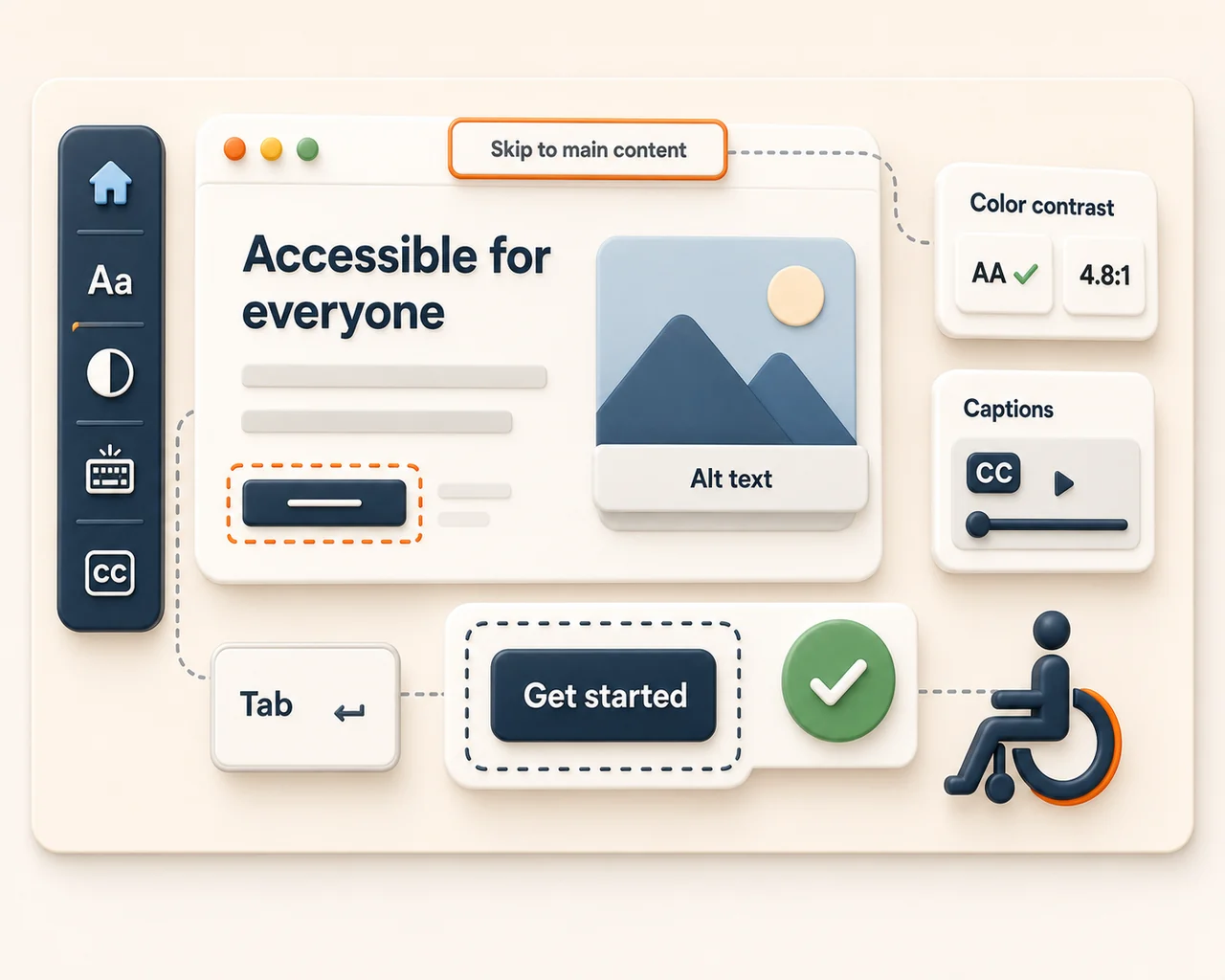
It spans vision, meaning screen readers, contrast, and text alternatives; motor, meaning keyboard navigation and tap size; and cognitive, meaning clear language and consistent layout.
Three checks
Keyboard access
Tab through every function on your site without ever touching a mouse.
Screen reader
Confirm your content reads aloud in the right order, not a scrambled one.
Color contrast
Make sure low-vision users can actually read your text against its background.
Worth remembering
In 2024, plaintiffs filed 4,187 ADA digital-accessibility lawsuits, over eleven a day and rising.
That is not a niche legal risk anymore, it is a daily occurrence across the country. Small businesses get named in these suits just as often as large ones.
What to do about it
Most accessibility gaps are quiet until someone hits one. Get a free website audit and I will show you where your site falls short.
Where this shows up in my work
 Cookies on this site