
What is a sitemap?

A sitemap is a file that lists the pages on your website so search engines can find them all. It usually lives at yoursite.com/sitemap.xml and updates itself when you add a page. It helps search engines discover your pages faster, but it does not force them to rank or even include those pages.
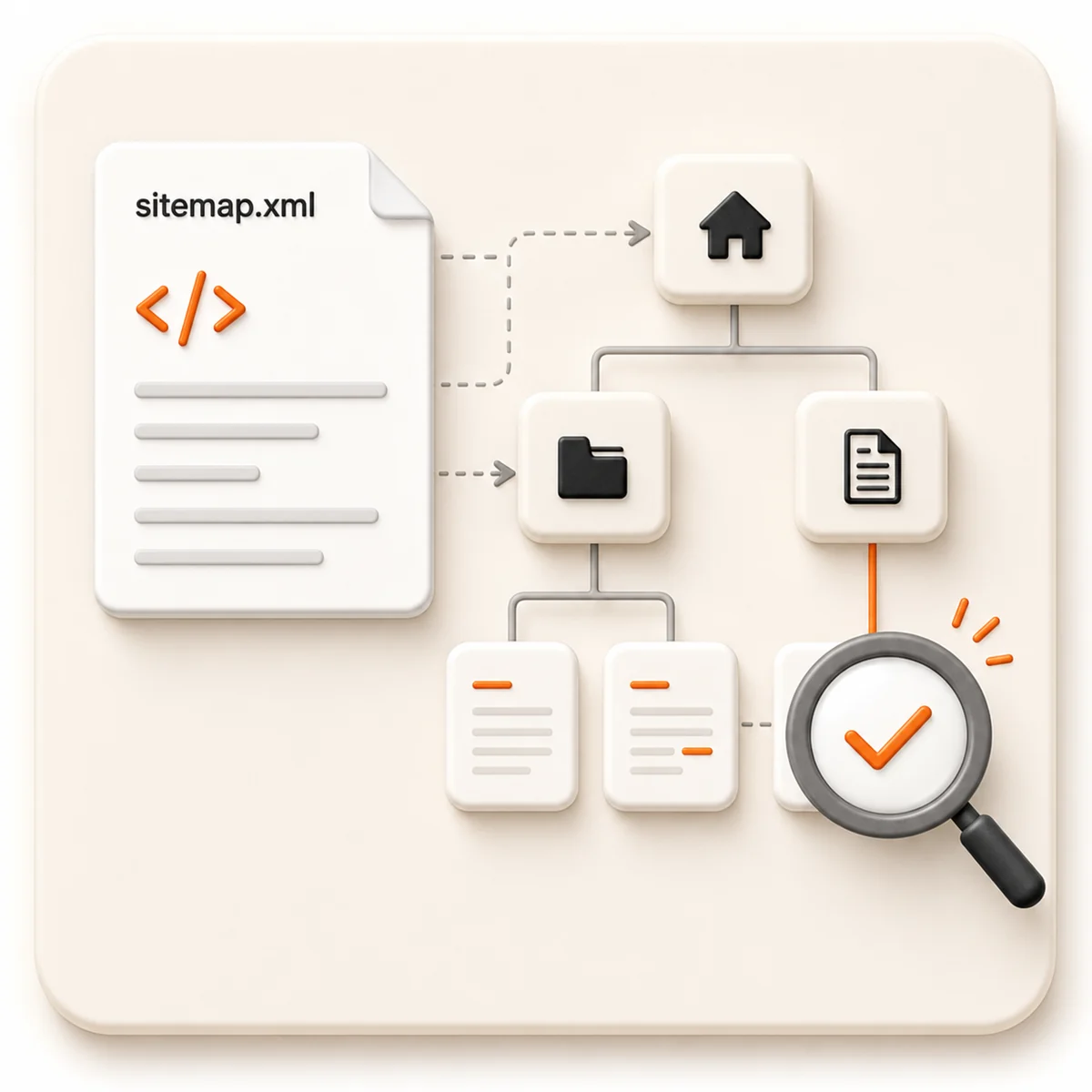
In plain English
Think of it like handing a delivery driver a list of every apartment in your building instead of hoping they wander every hallway. The driver still decides which doors are worth knocking on, but at least now they know the doors exist. Pages buried three or four clicks deep are the ones most likely to get skipped without that list.
Three things to know
sitemap.xml is for machines
It is a plain file of URLs meant for search engines, not something your customers ever click or read.
An HTML page list is for people
That is a normal page linking to your main sections, and it helps visitors and internal linking, but it is a different thing from sitemap.xml.
Discovery is not the same as ranking
Listing a page tells search engines it exists; getting it indexed and ranked still depends on whether the page is worth showing.
Worth remembering
Google's official sitemap documentation says you might not need a sitemap if your site is small, which it defines as about 500 pages or fewer, and every important page is already reachable by following links from your homepage.
Most small-business sites are well under 500 pages, so a sitemap is not the thing standing between you and traffic. It matters most when your site is brand new with few links pointing at it, or when pages are hard to reach by clicking around.
What to do about it
I set up sitemaps automatically on the sites I build, then check that the important pages are actually reachable by clicking. Get a free website audit
Where this shows up in my work
 Cookies on this site