
Should I use AI to write my website?

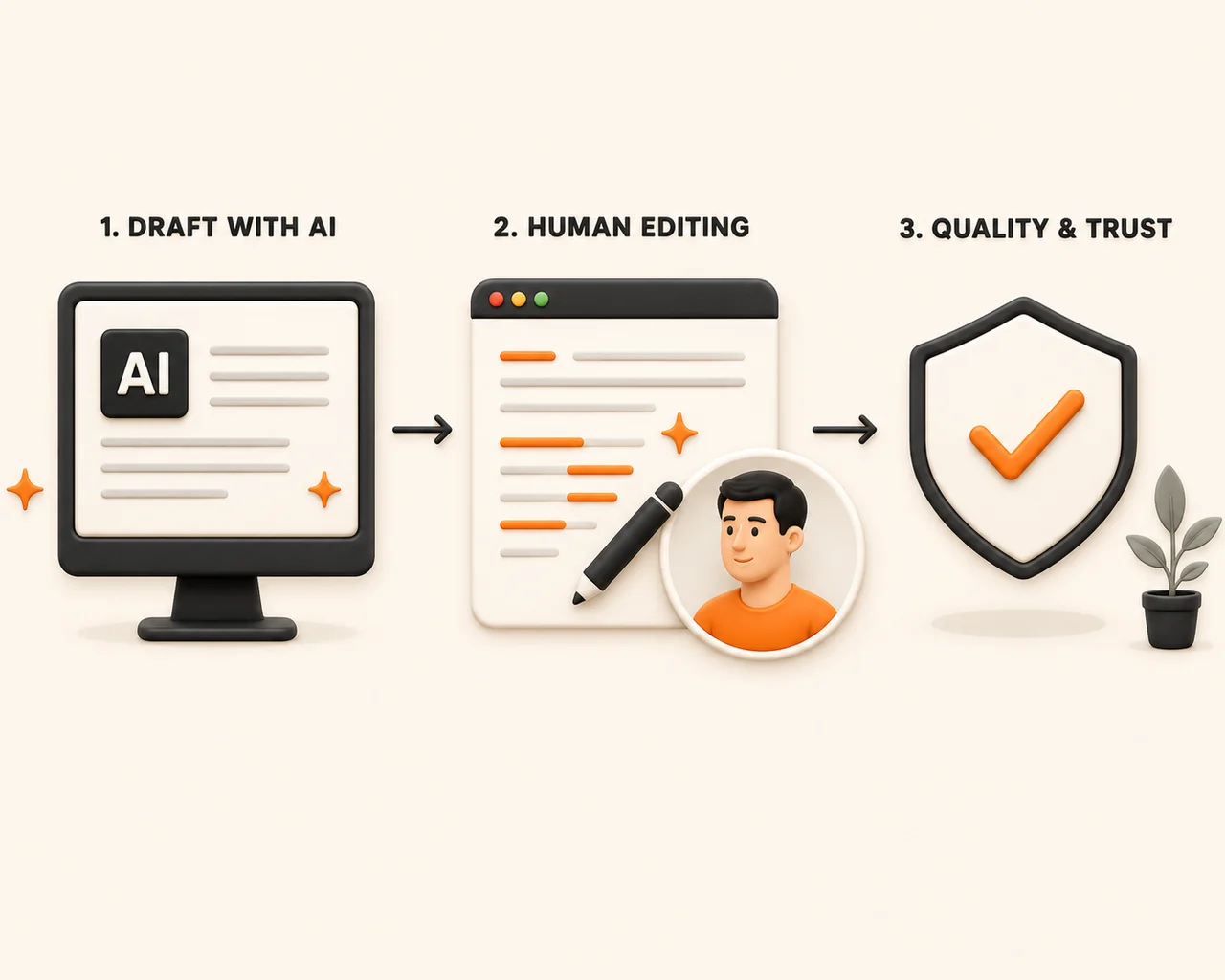
Yes, as a drafting tool. Google does not ban AI-written content, and it has said so plainly. What it does penalise is content churned out at scale to chase rankings, no matter who or what produced it. So use AI to get a rough draft on the page, then rewrite it with your own facts before anyone reads it.
In plain English
Think of AI like a very fast intern who has never met your customers, never seen your shop, and will confidently make things up rather than admit it. It can hand you a tidy first draft in ten seconds, which saves you the misery of the blank page. But every sentence that is actually specific and true still has to come from you.
Three things to know
Google judges the page, not the tool
Its guidance targets low-effort content mass-produced to game rankings, whether a person, a machine, or both wrote it.
AI cannot know your specifics
Your town, how you actually do the job, what you tell nervous customers on the phone, the questions you get every week: that has to come out of your head.
Be the last editor, always
Read every line out loud before it goes live and delete anything you would never say to a customer standing in front of you.
Worth remembering
Google reported that its March 2024 spam and core updates reduced low-quality, unoriginal content in search results by 45 percent, more than the 40 percent improvement it had originally expected.
That cleanup was aimed at content produced at scale to boost rankings, and Google was explicit that the policy applies whether automation, humans, or a combination made it. If you publish AI text you never edited, you are publishing exactly the kind of page that pass was built to clear out.
What to do about it
I use AI the way I use a calculator: quick on the boring parts, never in charge of the answer. If you want a straight read on whether your pages sound like you or sound like a machine, Get a free website audit.
Where this shows up in my work
- See SEO and content structure.
- Or read recent builds and their results.
 Cookies on this site