
What is SSL?

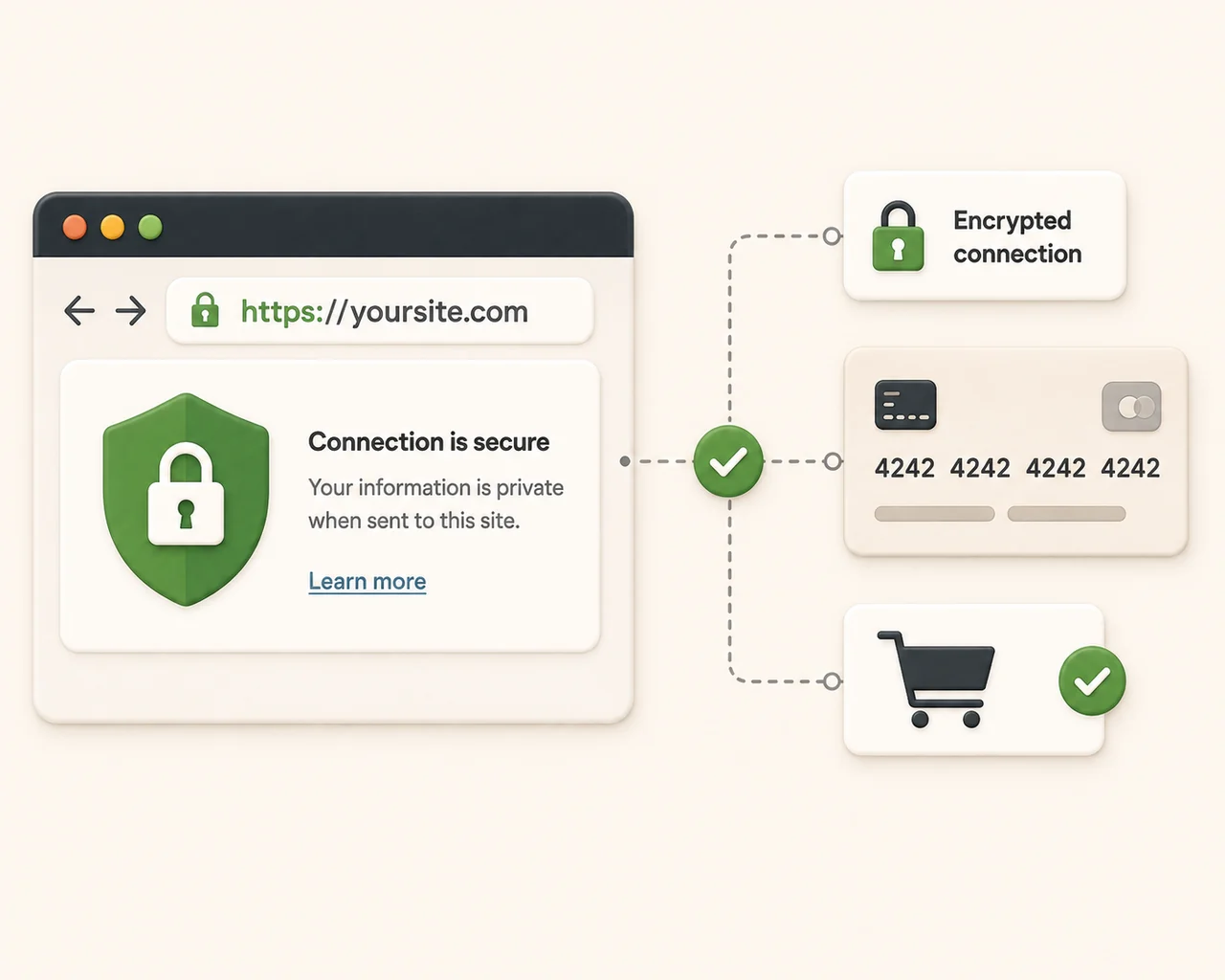
SSL stands for Secure Sockets Layer. It is the little padlock in your browser bar, and what stands between your visitor and a big red "Not Secure" warning. In plain terms, it is the lock that proves your site is safe to use.
In plain English
Think of SSL as a sealed envelope instead of a postcard. Without it, anything a visitor types, a password, a card number, travels in the open. With it, the message is sealed, and the browser tells everyone it is safe to send.
Three things it does
Encrypts data
It scrambles the information passing between your visitor and your site so it cannot be read in transit.
Verifies it is really you
It proves the site is genuinely yours and not an imposter, which matters more every year.
Earns trust
The padlock quietly reassures people right at the moment they decide whether to buy.
Worth remembering
84% of people will abandon a purchase on a site that isn't secure.
No padlock, no sale, for most of your visitors. And modern browsers now actively warn people away from insecure sites before they even reach your page.
What to do about it
Every site should have SSL, and it is usually quick to fix. If your site still shows "Not Secure," flag it in a free audit and I will tell you exactly what to do.
Where this shows up in my work
 Cookies on this site